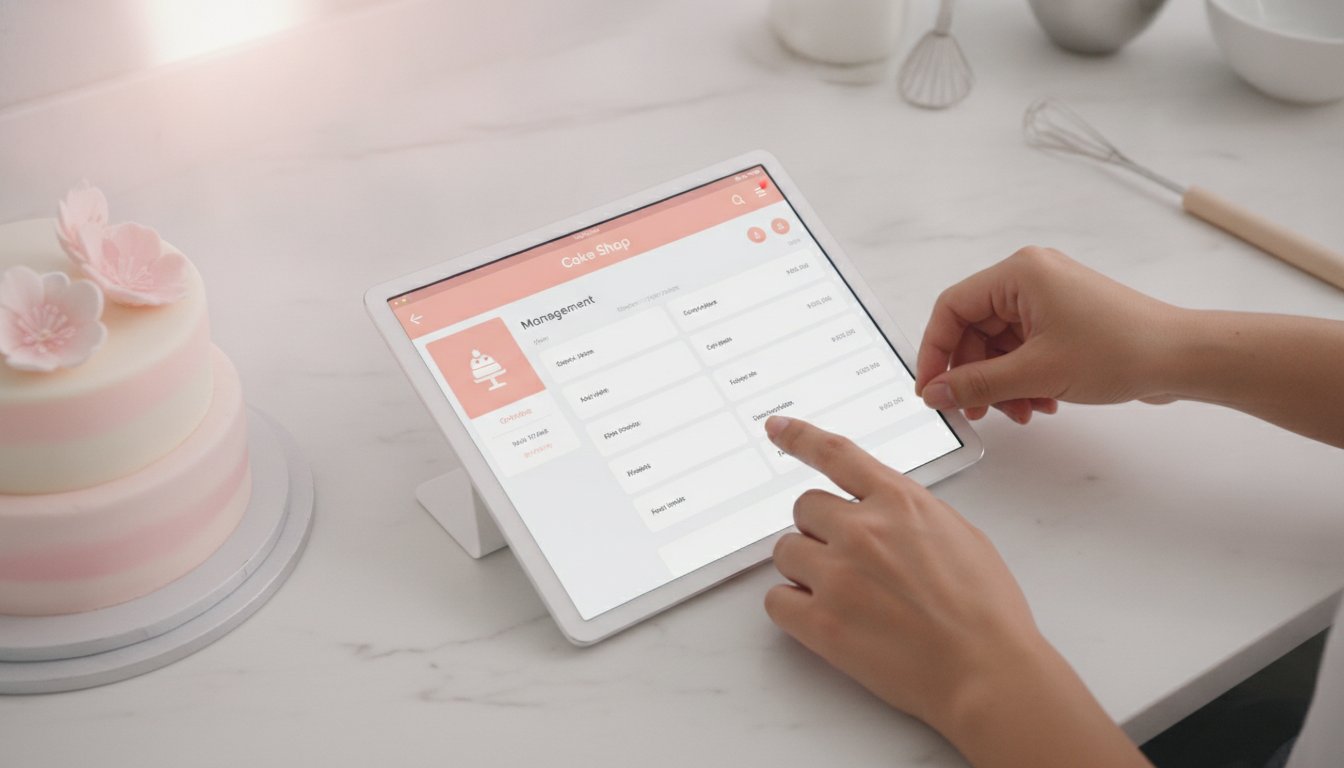
How to Build a Cake Shop Management System That Actually Works in 2026
Imagine it's late Friday evening and you're staring at a half-finished wedding cake, only to realize the inspiration photo is lost somewhere in a sea of unread emails. You check your handwritten notes, but they don't mention the specific shade of dusty rose the bride requested; a quick glance at the pantry confirms you're also two pounds short on unsalted butter. If this cycle of frantic store trips and misplaced details feels familiar, you're certainly not alone. Most artisanal bakers start their journey for the love of the craft, only to find themselves buried under a mountain of chaotic paper logs and pricing guesswork that eats away at their peace of mind.
It's time to reclaim your creative energy and your evenings. Implementing a modern cake shop management system isn't just about going digital; it's about building a professional partner that guards your profit margins and simplifies your daily workflow. You'll learn exactly how to transition from administrative overwhelm to a streamlined ecosystem that tracks every ingredient and labor hour with precision. We'll explore the essential tools for 2026, including automated shopping lists and mobile-first quote calculators, to ensure your business remains as polished as your final designs.
Key Takeaways
- Discover how a centralized digital hub replaces the "creative chaos" of paper logs with a sophisticated and professional framework.
- Identify the three essential pillars of pricing, order management, and logistics that ensure your bakery operates with total precision.
- Use the "Hidden Cost" formula to calculate exactly how much manual administration is draining your monthly profit margins.
- Learn the five-step process to transition your recipes and client lists into a robust cake shop management system without technical overwhelm.
- Understand why choosing mobile-first software designed by industry pros is the key to maintaining a calm and productive kitchen environment.
Understanding the Cake Shop Management System: Beyond the Paper Order Book
Transforming your passion into a sustainable enterprise requires more than a high-end stand mixer and a talent for intricate buttercream work. A modern cake shop management system serves as the centralized hub where your pricing, order details, and logistical schedules converge into a single source of truth. It's the digital brain of your operation, designed to replace the fragmented notes and mental checklists that often lead to burnout. By consolidating every facet of your business into one accessible platform, you move from a reactive state of "putting out fires" to a proactive state of total control.
In 2026, the U.S. baked goods market is projected to reach $97.7 billion, and the most successful players are those who have mastered the role of the "Organized Creative." This new standard for artisanal baking acknowledges that your time is your most valuable ingredient. If you spend three hours a day chasing client emails or recalculating ingredient costs, you're losing the time needed to innovate with new textures and flavors. A robust cake shop management system reduces this administrative friction, allowing you to reclaim your creative energy while ensuring your business remains profitable and professional.
Why Paper Logs and Spreadsheets Are Your Profits Silent Killers
Paper logs are deceptive. They feel tactile and immediate, but they harbor hidden risks that directly impact your bottom line. Manual data entry leads to a high rate of error, particularly when you're trying to decipher hurried handwriting during a frantic weekend rush. If you've ever misplaced a client's inspiration photo or forgotten to adjust a recipe for a last-minute allergen request, you've experienced the cost of "lost data." These small oversights accumulate, creating a chaotic environment that erodes client trust and your own peace of mind.
While spreadsheets offer more structure than a notebook, they often fail to track real-time labor costs effectively. Most bakers ignore the "hidden cost" of their own time, yet labor is frequently the most significant expense in a boutique kitchen. Without a built-in timer to track exactly how long a specific sugar flower arrangement takes, you're likely underpricing your work. Relying on static spreadsheets means you're always looking at the past rather than managing your current resources with precision.
The Shift from "Baker" to "Business Owner"
Transitioning from a maker to a manager is a pivotal moment for any growing operation. This shift requires a professional partner that offers calm reliability and structural oversight. While your craft remains artisanal, your infrastructure should be technical. Many bakers find that integrating a sophisticated Point of Sale (POS) System or a specialized management app provides the necessary data to make informed growth decisions. It's about moving away from the anxiety of the "solopreneur" and toward the confidence of a seasoned entrepreneur who understands their margins.
A management system is the structural backbone of a growing boutique bakery. It provides the stability you need to scale your production without sacrificing the quality that made your brand famous in the first place.
The Essential Pillars of a Professional Bakery Management Framework
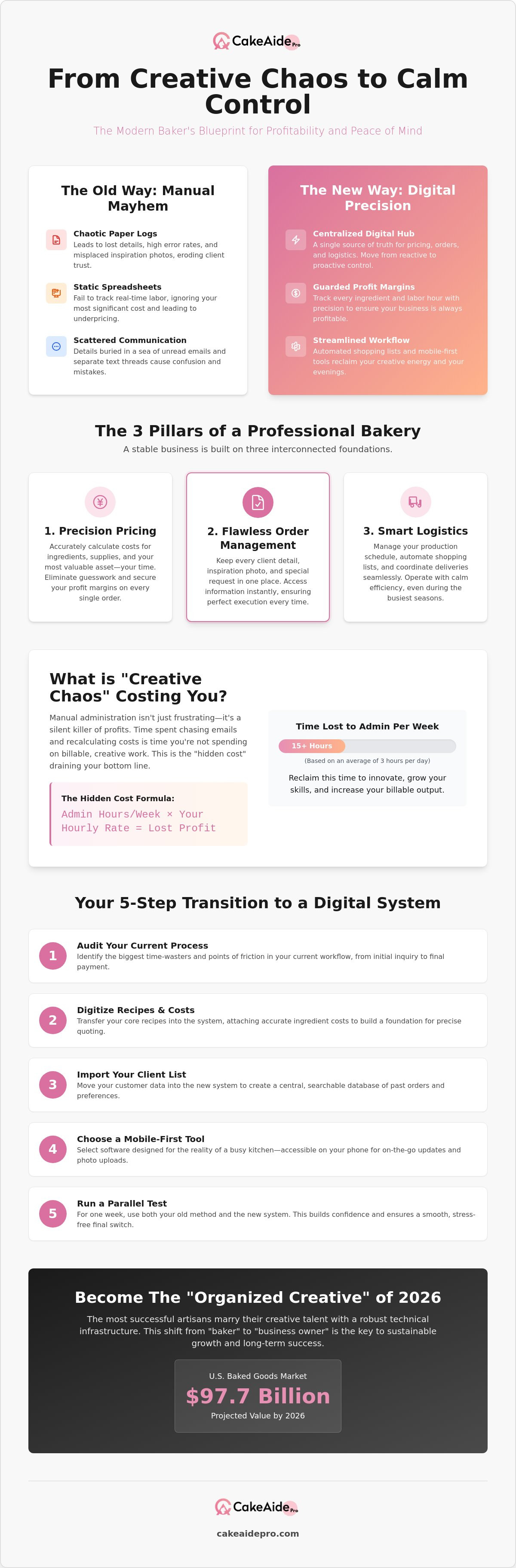
A high-functioning cake shop management system rests on three foundational pillars: Pricing, Order Management, and Logistics. If one of these pillars is weak, the entire structure of your business feels unstable. Imagine having the perfect order management process but failing at pricing; you'll be busy, but you won't be profitable. Conversely, perfect pricing means little if your logistics fail and you miss a delivery. A professional framework ensures these components communicate with each other, creating a seamless flow from the first inquiry to the final delivery.
Since you spend most of your day at the workbench rather than a desk, mobile accessibility is a non-negotiable requirement. Your management tool must move with you. Whether you're checking a recipe while scaling ingredients or uploading a client's inspiration photo directly from your phone, the system should act as an extension of your hands. This visual documentation is vital. Storing reference images within the specific order file prevents the heart-sinking moment of realizing you've missed a critical design detail because it was buried in a separate text thread.
Precision Pricing: The Quote Calculator Advantage
Stop guessing your prices based on what the bakery down the street charges. Every kitchen has unique overheads, and your pricing must reflect your specific reality to ensure long-term survival. A professional quote accounts for every gram of high-quality butter, a portion of your monthly utilities, and your specific labor rate. When you follow FDA guidelines for food businesses regarding labeling and manufacturing, you realize that administrative compliance is also a cost that needs to be captured. Utilizing a specialized cake pricing calculator app removes the emotional weight of quoting, providing you with data-backed confidence that every order contributes to your growth.
Automated Logistics: Shopping Lists and Labor Timers
Efficiency in the kitchen often boils down to how well you manage your supplies and your seconds. Automated shopping list generation takes the guesswork out of your weekly inventory run by aggregating ingredient needs across all active orders. If you're managing a global clientele or following international recipes, the ability to toggle between metric and imperial units with a single click is a significant time-saver. This level of detail is exactly what a dedicated cake shop management system provides to keep your workflow moving.
The "Labor Gap" is where most profits disappear. By using a built-in labor timer, you can see the difference between your estimated time and the actual hours spent on intricate sugar work or complex assembly. This data is essential for accurate tax reporting and future profit planning. If you're ready to see how these pillars can stabilize your kitchen, consider starting a 7-day free trial to experience the difference firsthand.
Evaluating Your Efficiency: Is Your Current Workflow Costing You Money?
If you finish your week feeling physically exhausted yet your bank balance doesn't reflect that level of effort, it's time to examine the efficiency of your workflow. Many artisanal bakers focus intensely on the cost of premium ingredients while completely ignoring the cost of the time spent managing them. When you operate without a dedicated cake shop management system, you're likely performing high-level administrative tasks in a fragmented, manual way that drains your profitability. This inefficiency creates a "hidden cost" that quietly erodes your margins before you even preheat the oven.
The emotional toll of this friction is just as significant as the financial one. Admin burnout occurs when the mental load of tracking orders, ingredient stock, and client preferences outweighs the joy of the creative process. This exhaustion often leads to a decline in creative quality or, worse, expensive mistakes like double-booking a weekend or missing a critical allergen requirement. By contrasting the "Manual Method" of sticky notes and mental checklists with a "Digital System," you can clearly see where your energy is being wasted and where it can be reclaimed.
Calculating the Real Cost of Administrative Friction
To understand the impact on your bottom line, you must perform a self-audit of your "invisible" tasks. Track every minute you spend on grocery planning, following up on unpaid invoices, and clarifying design details over social media messages. Administrative friction is the gap between effort and income. If you apply the formula Admin Hours x Your Hourly Rate = Lost Profit, the results are often staggering. While manual management feels free, industry benchmarks suggest that a streamlined cake shop management system can save a boutique baker up to 10 hours of administrative labor per week. That is time you could spend on high-value consultations or refining your signature techniques.
Identifying Bottlenecks in the Custom Cake Lifecycle
Every custom cake follows a specific lifecycle from the initial inquiry to the final delivery. Bottlenecks typically appear during the transition phases, such as moving from a design consultation to a formal quote. Many bakers lose hours chasing payments or searching for specific details buried in long email chains. These tasks are actually part of the professional duties of a food service manager, and they require a structured approach to stay profitable. Centralizing your data ensures you never face the "where did I write that?" panic. Instead of hunting for information, you have a clear, calm path forward, ensuring every client receives the professional communication they expect from a premium brand.
How to Transition to a Digital Management System in 5 Steps
Moving your boutique bakery from paper logs to a digital space doesn't have to be a technical struggle. It's a structured evolution that protects your creative energy and ensures your business infrastructure is as polished as your designs. By following a methodical approach, you can migrate your data without disrupting your current production schedule. A modern cake shop management system acts as a reliable partner during this shift, providing the logic and order needed to scale your operations with confidence.
Start by auditing your current data, including your most successful recipes, ingredient costs, and client contact lists. Standardizing your pricing formula is the next critical move; this ensures every future quote is consistent and profitable. Once your foundation is set, migrate your active order book into the system to centralize your tracking. This transition allows you to see your entire month at a glance, replacing the anxiety of "what's next" with a clear, calm workflow.
Step 1: The Ingredient and Recipe Audit
Accurately inputting your ingredient costs to reflect 2026 market prices is the first move toward precision. Prices for high-quality dairy and specialty flours fluctuate, so your system must allow for quick updates to keep your margins healthy. Organize your recipes so they're searchable by flavor or dietary tags, such as gluten-free or plant-based, to meet the rising demand for "better-for-you" options. Before you generate your first digital quote, you must also set a firm hourly labor rate. This ensures you're compensated for your expertise and the intricate time spent on artisanal textures.
Step 2: Define and Digitize Your Pricing Structure
Once your ingredient and recipe data are refined, the next crucial step is to formalize your pricing. Your digital management system allows you to create dynamic pricing formulas that factor in ingredient costs, labor rates, overheads, and desired profit margins. This eliminates guesswork and ensures every quote, from a simple cupcake order to an elaborate wedding cake, is consistent and profitable. Set up different pricing tiers for rush orders or custom designs, and easily adjust for fluctuating market prices, guaranteeing your profitability in a competitive market.
Step 3: Migrate Your Active Order Book
With your foundational data and pricing models in place, it's time to centralize your active orders. Input current and upcoming orders into your new cake shop management system, including client details, order specifications, delivery dates, and payment status. This transition provides an immediate, visual overview of your entire production schedule, replacing scattered notes and spreadsheets with a single, clear dashboard. Assign tasks to team members, track order progress in real-time, and manage your inventory against upcoming demand, ensuring smooth operations and timely deliveries.
Step 4: Automating Client Relationships
Smart Reminders transform a one-time buyer into a lifelong client by acknowledging the milestones that matter to them. Use your management system to collect data like birthdays and anniversaries during the initial consultation. This isn't about being intrusive; it's about providing a high-touch, personalized experience that makes your clients feel understood. By reviewing past order history, you can send targeted promotions that resonate with their specific preferences. If a client previously ordered a vegan chocolate cake, alerting them to a new plant-based pastry innovation feels like a thoughtful service rather than a generic sales pitch.
Step 5: Optimize and Analyze for Growth
The final step in your digital transition is to harness the power of your accumulated data for continuous improvement and strategic growth. Your cake shop management system provides valuable insights into sales trends, popular products, busiest periods, and customer preferences. Use these analytics to refine your menu, optimize inventory, and tailor marketing campaigns. Leverage data exports to simplify financial reporting and tax preparation, ensuring compliance with evolving regulations like the 2026 1099 form threshold. This data-driven approach allows you to make informed decisions, protecting your profits and scaling your bakery with confidence.
By systematically implementing these five steps, your bakery can seamlessly transition to a powerful digital management system. This methodical approach not only streamlines operations and enhances client relationships but also positions your business for sustained growth and profitability in the competitive 2026 market. If you're ready to organize your kitchen and protect your profits, you can start your 7-day free trial with Cake Aide Pro to begin your digital transition today.
Selecting the Right Software for Your Boutique Cake Business
Choosing the right infrastructure for your bakery is a strategic decision that impacts every hour of your workday. While larger commercial operations might look toward heavy Enterprise Resource Planning (ERP) systems, these complex platforms often feel clunky and intimidating for a boutique baker. You don't need a system designed for a factory; you need an agile partner that understands the specific nuances of custom orders and artisanal craftsmanship. A dedicated cake shop management system should be an investment in your future growth, acting as the foundation that supports your scaling efforts rather than a technical burden that slows you down.
The best software for an artisanal business is one that feels intuitive from the first login. This "built by bakers" philosophy is essential because it ensures the user experience mirrors your actual kitchen workflow. When a tool is designed by people who have felt the pressure of a multi-tier wedding cake delivery, the features tend to be practical rather than purely theoretical. Positioning this technology as a professional partner allows you to shift your focus back to innovation, knowing the logistical details are being handled with total precision.
Why Mobile-First Design Wins for Busy Bakers
Contrast the desk-bound software model with the flour-on-hands reality of your daily kitchen life. You spend your day at the workbench, not sitting in front of a computer monitor. A mobile-first design ensures you have your entire order book in your pocket, whether you're checking a recipe ratio at the mixer or verifying a client's inspiration photo during a last-minute supply run. This accessibility is powered by cloud syncing, ensuring that any update you make on your phone is instantly reflected across all your devices. It provides a level of seamlessness that allows you to stay focused on the art of baking while the logistics manage themselves in the background.
The Cake Aide Pro Edge: Empowering Your Creative Journey
Cake Aide Pro specifically addresses the pains of the boutique industry by providing a streamlined ecosystem for the modern entrepreneur. Our platform features a Quote Calculator, Labor Timer, and automated Shopping List generation, creating a "triple threat" of efficiency that guards your profit margins. These tools work in harmony to eliminate the guesswork that often leads to underpricing and administrative burnout. By centralizing your data, you gain the clarity needed to make informed business decisions without sacrificing your creative spark.
Transitioning to a professional system is a low-risk move when you utilize a 7-day free trial to test the workflow within your own kitchen. This allows you to experience the calm reliability of a structured digital environment before making a long-term commitment. If you're ready to move beyond the paper order book and elevate your operations, you can Professionalize Your Home Cake Business today. Investing in the right tools is the first step toward building a bakery that is both creative and consistently profitable.
Reclaim Your Creative Energy and Scale with Precision
Transitioning to a modern cake shop management system is the single most effective step you can take to professionalize your workflow and protect your profit margins. You've seen how manual logs and "hidden" labor costs act as silent killers to your bottom line. By embracing the pillars of digital order, you move from the stress of administrative friction to the calm reliability of a streamlined kitchen. You deserve to spend your hours innovating with new textures and designs rather than chasing missing client details or recalculating ingredient costs. Mastering these digital tools ensures your business infrastructure is as polished as your final artisanal creations.
Cake Aide Pro was built by industry professionals who understand exactly what it takes to run a successful boutique bakery. With seamless mobile and web access, you can manage your entire order book whether you're at the workbench or on a supply run. It's time to stop the guesswork and start building the sustainable enterprise you've always envisioned. Start your 7-Day Free Trial with Cake Aide Pro today and experience the clarity of a truly organized creative journey. Your craft is artisanal; your management should be, too.
Frequently Asked Questions
Do I need to be tech-savvy to use a cake shop management system?
No, you don't need advanced technical skills to benefit from a modern digital partner. These systems are crafted with an intuitive user interface that mirrors your natural kitchen workflow. If you can navigate a smartphone or send an email, you can easily manage your recipes, quotes, and client lists without any technical frustration or long learning curves.
Can a management system help me with my taxes at the end of the year?
Yes, a robust system simplifies your tax preparation by organizing your financial data throughout the year. You can use CSV data exports to provide your accountant with detailed reports on ingredient costs and labor hours. This is especially helpful in 2026 as reporting thresholds for 1099 forms have increased to $2,000 and deduction rules for business meals continue to evolve.
How much should I expect to pay for a bakery management app in 2026?
Industry pricing varies significantly based on the complexity of your operation and the features you require. Basic plans for general restaurant software can range from $0 to $149 per month per location, while corporate-level ERP systems like FlexiBake start at $295 per month. Most specialized apps for boutique bakers offer tiered subscription plans that allow you to pay monthly, quarterly, or annually as your business grows.
Will a digital system work for a home-based baker, or is it only for shops?
A digital system is actually ideal for home-based bakers who need to maximize every square inch of their time and kitchen space. Because you're often managing every role yourself, the automation of shopping lists and client reminders provides the structural support of a larger team. It helps you maintain a professional image that rivals any brick-and-mortar storefront while protecting your personal time.
Can I track my actual baking time to see if I am making a profit?
Yes, using a built-in labor timer allows you to see the exact gap between your estimated and actual work hours. This data is the only way to ensure your hourly rate is truly covered in your final quote. When you track the time spent on intricate sugar work or complex assembly, you gain the confidence to price your expertise accurately and stop losing money on hidden labor.
What happens if I need to change my units from metric to imperial?
Most professional systems include a unit conversion feature that allows you to toggle between metric and imperial measurements with a single click. This flexibility is vital if you're working with international recipes or sourcing specialty ingredients from global suppliers. It ensures your scaling remains precise regardless of the original source of the recipe, preventing costly measurement errors.
Is it possible to store photos of cake designs within the system?
Yes, storing visual documentation directly within an order file is a core feature of a modern cake shop management system. By keeping inspiration photos and sketches attached to the client's record, you eliminate the risk of missing a critical design detail buried in an old email. This centralized approach replaces the creative chaos of searching through text messages and ensures your final product matches the client's vision.
How do automated shopping lists actually save me money?
Automated lists save you money by preventing over-purchasing and reducing the need for expensive, last-minute grocery store trips. By aggregating ingredient needs across all your active orders for the week, the system ensures you buy exactly what you need in one efficient run. This precision reduces food waste and protects your profit margins on every single project you undertake.